
How Expansive Clay Soil Affects Concrete in Humble, TX
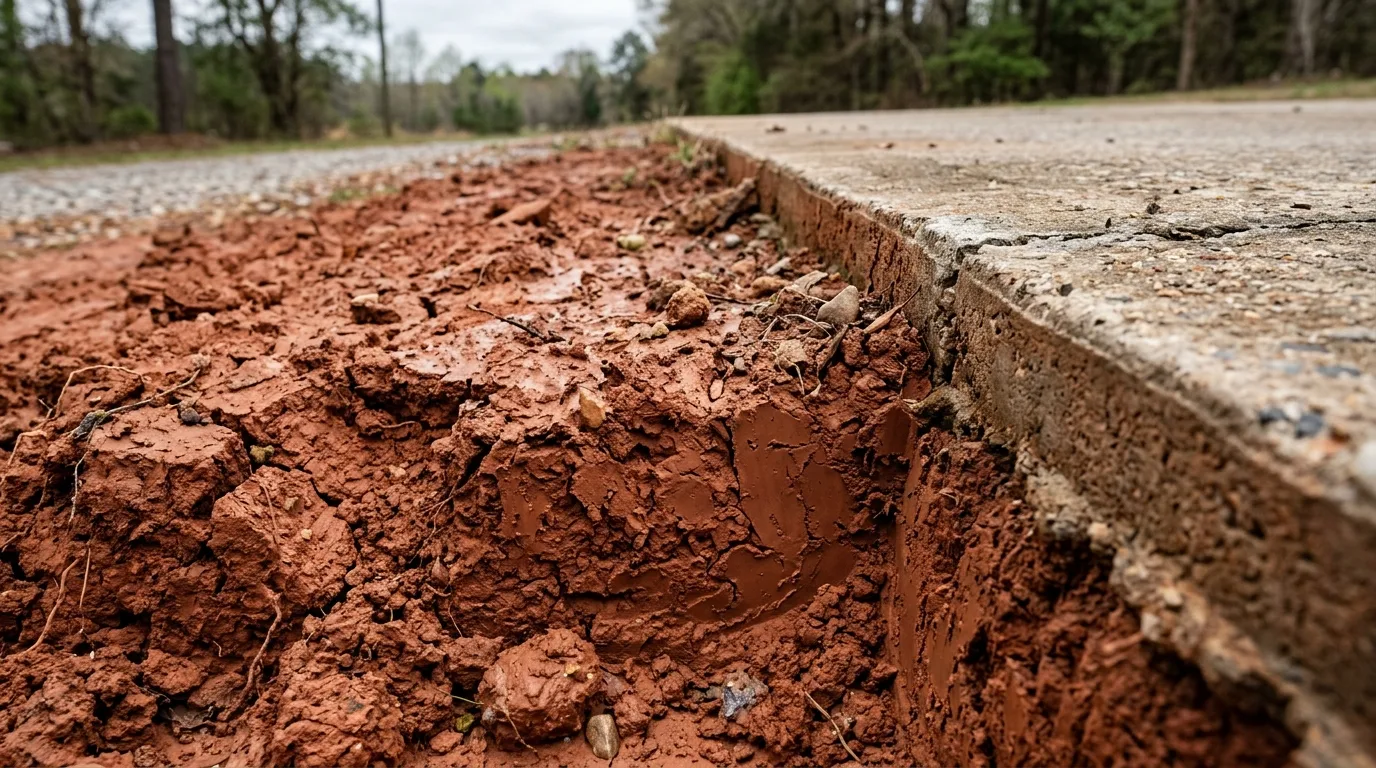
If you’ve lived in Humble for more than a few years, you’ve probably noticed it: a driveway that develops cracks even though it looks like it was poured well, or a patio with one corner that’s slightly higher than the rest. In most cases, the culprit isn’t poor workmanship — it’s what’s underneath the concrete. Humble sits on Houston Black clay soil, one of the most expansive soil types in the country, and understanding how it behaves is the key to getting concrete that actually lasts. This guide explains what expansive clay soil is, how it affects concrete, and what can be done to minimize the damage.
Worried About Soil Movement Under Your Concrete?
We design every project around Harris County's clay soil conditions.
Why Expansive Clay Soil Matters for Humble Homeowners
Houston Black clay — the dominant soil type across Harris County, including Humble — contains roughly 46% to 60% smectite clay minerals, which are known for their dramatic shrink-swell behavior. When this soil absorbs moisture, it expands; when it dries out, it contracts and can shrink significantly. That constant cycle of expansion and contraction puts pressure on anything sitting on top of it, including concrete slabs, driveways, and foundations.
For homeowners, this isn’t an abstract geology lesson — it’s the direct explanation for why so many driveways and patios in neighborhoods like Kings Mill and throughout Humble develop cracks, why some slabs settle unevenly, and why concrete that wasn’t installed with this soil in mind tends to fail years earlier than it should. Understanding this upfront changes how you think about a new concrete project — and how you evaluate contractors.
How Clay Soil Movement Shows Up in Concrete
Cracking is the most visible sign of soil movement. As the clay beneath a slab shrinks during dry periods, it can leave gaps that the concrete isn’t supported across, leading to cracks where the slab settles into the void.
Uneven settling happens when different sections of soil under a slab dry out or absorb moisture at different rates — common near downspouts, irrigation lines, or areas with inconsistent shade and sun exposure.
Heaving is the opposite problem: sections of soil that absorb more moisture than surrounding areas can swell and push a slab upward, creating bumps or tilted sections.
Joint separation occurs when adjacent slabs (like a driveway and an attached sidewalk) move at different rates, widening the joint between them over time.
Practical Ways Contractors Address Clay Soil
There’s no way to stop Houston Black clay from shrinking and swelling — but there’s a lot that can be done during installation to minimize how much that movement affects the concrete above it:
- Proper excavation depth. Removing enough of the topsoil and reaching more stable material beneath gives the new base layer something solid to sit on.
- Compacted aggregate base. A well-compacted base layer beneath the concrete helps distribute the slab’s weight evenly and reduces the impact of minor soil shifts.
- Reinforcement (rebar or wire mesh). Reinforcement doesn’t stop cracking, but it holds cracked sections together so they don’t separate or become trip hazards.
- Control joints. Strategically placed joints give the concrete planned locations to crack, rather than cracking randomly across the slab face.
- Proper drainage and grading. Directing water away from the slab — and away from the soil immediately beneath it — reduces the moisture swings that drive shrink-swell behavior.
- Adequate slab thickness. A thicker slab in areas with more pronounced soil movement provides more structural resilience against minor shifts.
How This Plays Out in a Real Project
When we evaluate a property in Humble for a new driveway, patio, or slab, soil conditions are one of the first things we assess — not as an afterthought, but as part of determining the right base depth, reinforcement plan, and joint layout for that specific location. Two driveways on the same street can sometimes need slightly different approaches depending on drainage patterns, tree root systems, and how the soil on each lot has historically behaved.
This is also why we’re cautious about extremely low bids for concrete work in Humble — cutting corners on excavation depth or reinforcement might not show up as a problem on day one, but it often shows up within a few years as cracking or settling that a properly prepared slab wouldn’t experience.
Get a Soil-Aware Concrete Estimate for Your Humble Property
We evaluate your site's specific conditions before recommending a plan.
Cost Factors Related to Soil Preparation
Soil-related work doesn’t have a single line-item cost, but it factors into the $4–$10 per square foot range typical for concrete projects in Humble through several components.
Excavation depth is the first variable — properties where the existing soil needs more removal to reach stable material require more time and equipment use. Base material and compaction add cost proportional to the area and depth needed, but this step is one of the most important for long-term durability. Reinforcement type and amount — whether wire mesh is sufficient or rebar is recommended — depends on the specific soil conditions and slab application, with driveways and larger slabs typically warranting more robust reinforcement than smaller patios. Drainage improvements, if needed, are priced separately but can meaningfully reduce the moisture swings that drive soil movement under your concrete.
Frequently Asked Questions
Can anything completely prevent cracking from clay soil?
No installation method can completely eliminate the possibility of cracking in areas with expansive clay soil — the goal of proper base preparation, reinforcement, and control joints is to manage where and how cracking occurs, and to minimize its severity, rather than prevent it entirely. A well-built slab in Harris County clay will typically develop minor, controlled cracking at joints over its lifespan, which is normal — the difference with proper preparation is that cracks stay small and don’t lead to settling or trip hazards.
How do I know if my existing concrete was built with clay soil in mind?
Signs that a slab wasn’t adequately prepared for clay soil include cracks that appeared relatively early (within the first few years), cracks that have visibly widened over time, or noticeable unevenness between sections. If you’re unsure, we can evaluate existing concrete and let you know whether what you’re seeing is normal minor settling or a sign that the original installation didn’t account for local soil conditions.
Does the time of year I pour concrete affect how clay soil impacts it?
Yes — pouring during Humble’s spring (March–May) or fall (September–November) months, when temperatures and soil moisture levels tend to be more moderate, can make it easier to achieve consistent compaction during installation. That said, the soil will continue its shrink-swell cycle year-round regardless of when the concrete was poured, so proper base preparation matters more than timing for long-term performance — though timing does affect the installation process itself.
Is there a way to fix soil movement under existing concrete without replacing it?
In many cases, yes — if a slab has settled due to soil movement but is otherwise structurally sound, leveling techniques like mudjacking or polyurethane foam injection can lift it back to grade without a full replacement. This won’t change the soil’s underlying behavior, but it addresses the visible symptom, often for many years, at a fraction of replacement cost.
Understanding your soil is the foundation — literally — of a concrete project that lasts. Humble Concrete Pros builds every project around Harris County’s specific soil conditions.
Build on a Plan That Accounts for Humble's Soil
Get a free, soil-aware estimate for your next concrete project.