
Why Concrete Foundations Crack in Harris County
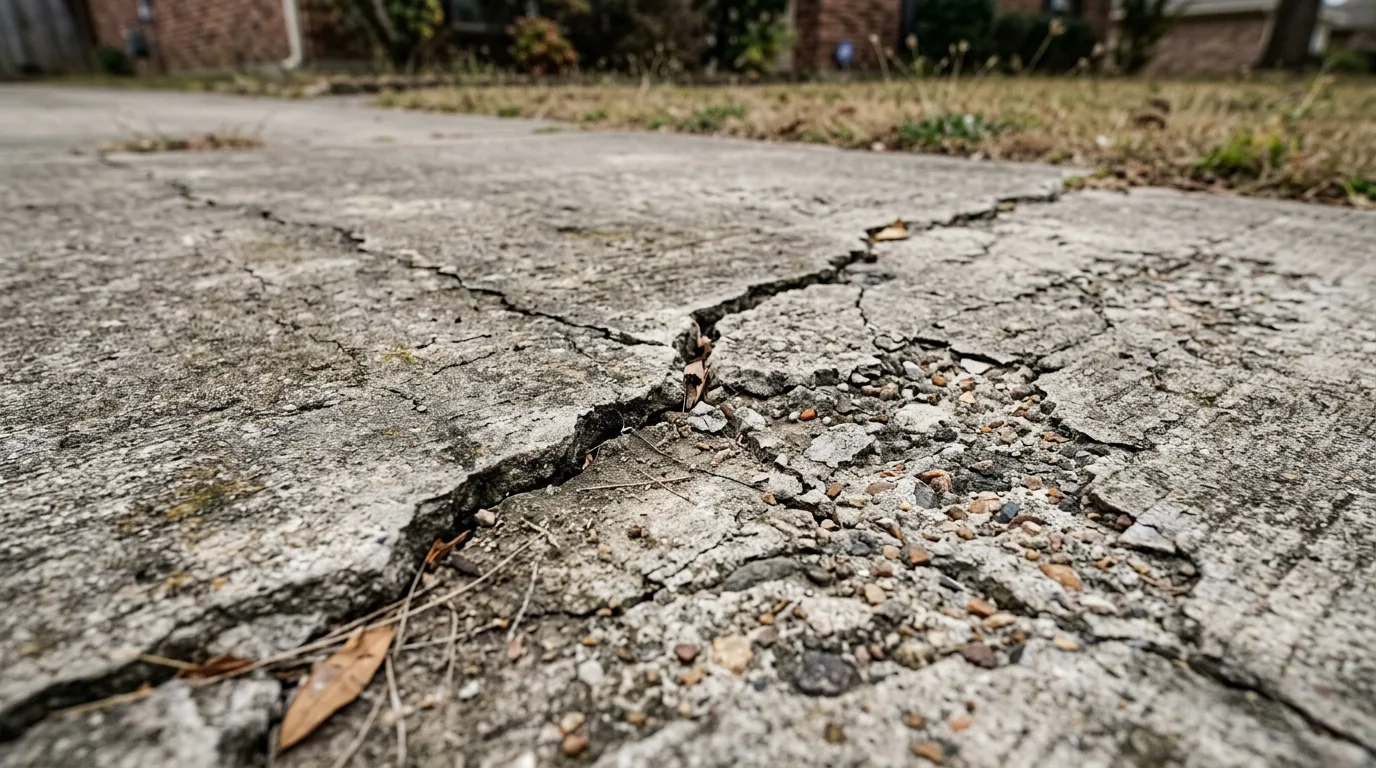
You walk into the garage one day and notice a crack in the slab that wasn’t there last year. Or maybe a door that used to close easily now sticks. For homeowners across Harris County, including Humble, foundation cracks are an extremely common concern — and an extremely common source of unnecessary worry, since not all cracks mean the same thing. This guide explains why foundations crack in this part of Texas, how to tell a normal crack from a serious one, and what homeowners can do about it.
Concerned About a Crack in Your Foundation or Slab?
We can evaluate it and tell you honestly whether it's a concern.
Why Foundation Cracking Matters for Humble Homeowners
The primary driver of foundation cracking across Harris County, including Humble, is the soil itself. Houston Black clay — the dominant soil type in the area — contains 46% to 60% smectite clay minerals, giving it dramatic shrink-swell behavior as moisture levels change throughout the year. During wet periods, the clay absorbs water and expands; during dry periods, it shrinks, sometimes pulling away from foundations and slabs and leaving gaps beneath them.
This cycle repeats every year, and over time, it puts cumulative stress on concrete foundations and slabs that simply doesn’t exist in areas with more stable soil. For homeowners near Eagle Springs or anywhere in Humble, this means foundation cracking isn’t usually a sign that something went catastrophically wrong — it’s often a predictable consequence of building on expansive clay, and the real question is how significant the cracking is and whether it’s actively progressing.
Common Types of Foundation and Slab Cracks
Hairline shrinkage cracks form during the concrete’s initial curing process and are typically cosmetic — thin, often less than 1/16 inch wide, and not associated with structural movement.
Settlement cracks develop over time as soil beneath a section of foundation shifts, often appearing as diagonal cracks near corners of windows and doors, or as cracks that are wider at one end than the other.
Heaving cracks occur when expanding clay soil pushes upward on a foundation or slab section, sometimes causing cracks along with visible doming or unevenness in the affected area.
Active/progressive cracks are cracks that continue to widen or lengthen over time — these are the ones that warrant the closest attention, regardless of which category they originally fell into.
Practical Signs to Watch For
Most homeowners aren’t sure which cracks are “normal” and which need attention. Here’s a general framework:
- Crack width under 1/8 inch, not growing. These are commonly cosmetic, especially if they appeared during the first year after construction or a new pour.
- Cracks wider than 1/4 inch, or visibly growing. These warrant a closer look, especially if they’re accompanied by other signs of movement.
- Doors or windows that newly stick or won’t latch properly. This can indicate the surrounding structure has shifted slightly, which is sometimes (but not always) related to foundation movement.
- Gaps appearing between walls and ceilings or floors. Similar to sticking doors, small gaps can indicate movement, though they’re not always foundation-related.
- Cracks that follow a stair-step pattern in brick or block. This pattern often indicates differential settlement — different parts of the foundation moving at different rates.
- Water pooling near the foundation after rain. Poor drainage contributes to the moisture swings that drive clay soil movement, so addressing drainage can help prevent future cracking even if it doesn’t fix existing cracks.
How We Evaluate Cracks in Humble
When we’re asked to look at a cracked slab, driveway, or foundation-adjacent concrete in Humble, the first step is determining whether the crack is active (still moving) or stable (formed in the past and not currently progressing). This often involves looking at the crack’s width, pattern, and any visible signs of recent movement, as well as asking about the property’s history — when the crack first appeared, whether it’s changed, and what the drainage and irrigation situation looks like nearby.
For cracks related to flatwork — driveways, patios, walkways — we can usually recommend a repair approach directly. For cracks that appear to involve the home’s structural foundation itself, we’ll be upfront that a foundation specialist or structural engineer may be the more appropriate next step, since that’s outside the scope of concrete flatwork repair.
Get an Honest Evaluation of Your Concrete Cracks
We'll tell you what we see and what we'd recommend — no upselling.
What Affects the Cost of Addressing Foundation-Related Cracks
For concrete flatwork affected by soil movement — driveways, patios, walkways, and slabs — repair costs are typically a fraction of the $4,500–$9,500 range for a full driveway replacement, and you can get a sense of potential project costs using our online cost calculator.
Severity and extent of cracking is the biggest driver — a few hairline cracks cost far less to address than widespread cracking across multiple slab sections. Whether the cause is addressed affects long-term cost — a repair that also improves drainage or addresses an active soil movement issue costs more upfront but can prevent the same crack from reappearing. Type of concrete affected matters too — driveway and patio repairs are more straightforward (and often less expensive) than any work that intersects with a home’s structural foundation, which falls outside typical concrete flatwork pricing. Access and location also play a role, as cracks in tight or hard-to-reach areas take more time to address properly.
Frequently Asked Questions
Should I be worried about every crack I see in my driveway or patio?
Not necessarily. Hairline cracks under about 1/8 inch that aren’t growing are extremely common in Harris County and often don’t indicate a serious problem — they’re frequently a normal result of concrete curing or minor, stable soil movement. Cracks that are wider, growing over time, or accompanied by noticeable unevenness are worth having evaluated, but in our experience, most cracks homeowners ask about fall into the “monitor, don’t panic” category.
How is a foundation crack different from a driveway or patio crack?
Foundation cracks affect the structural component of your home that everything else sits on, while driveway and patio cracks affect standalone concrete flatwork that isn’t structurally supporting your house. This distinction matters because foundation issues may require a structural engineer’s evaluation, while flatwork cracks — even significant ones — are typically addressed through standard concrete repair methods. If you’re not sure which category a crack falls into, a concrete contractor can usually help you identify whether it’s flatwork or potentially foundation-related.
Can I prevent future cracking with better drainage?
Improving drainage — directing downspouts away from the foundation, grading soil away from the home, and managing irrigation near slabs — can reduce the moisture swings that drive Houston Black clay’s shrink-swell cycle, which in turn can reduce (though not eliminate) future cracking risk. This is one of the most cost-effective preventive measures available to homeowners, since it doesn’t require any concrete work itself, just attention to how water moves around your property.
Does the age of my home affect how much cracking I should expect?
To some extent, yes. Concrete flatwork that’s 15 to 20+ years old has been through many shrink-swell cycles, so some cracking is more expected than in newer concrete — though well-built older concrete can also still be in great shape if the soil conditions happened to be favorable or the original installation was particularly well-prepared. Newer concrete (under 5 years) with significant cracking is more worth investigating, since it suggests either an active soil issue or a preparation issue that’s worth understanding.
If you’re seeing cracks anywhere on your Humble property and aren’t sure what they mean, we’re happy to take a look.
Get Your Cracks Evaluated by Humble Concrete Pros
Free assessments, honest recommendations, no pressure.